Showing posts with label medical. Show all posts

Tuesday, January 12, 2016

Harold Gillies

            I’m not sure where I first heard about Harold Gillies.  It may have been through a podcast, or maybe in a book I was reading since we’re in the midst of the World War One centenary.  I don’t really know.  But, I remembered him because what he did really stuck with me.  And it turns out he kept doing cool stuff after the First World War!
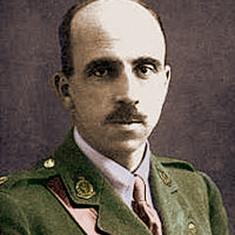

            Harold Delf Gillies was born on June 17, 1882 in Dunedin, New Zealand, the youngest of Robert and Emily Gillies’ eight children.  Robert was a Member of Parliament and a businessman, but died when Harold was only four.  Because of his positions, though, Robert left his family well taken care of.  Harold followed his brothers to prep school in England, and then to Wanganui College back in New Zealand.  Harold was a skilled artist and throughout school, he was also good at sports, including cricket, golf, and rowing.  After Wanganui, Harold went to Caius College at Cambridge, back in England, and won ribbons for rowing, “despite a stiff elbow sustained sliding down the banisters at home as a child” (1).
            At Cambridge Harold studied medicine and became a fellow of the Royal College of Surgeons in 1910, specializing in ear, nose, and throat surgery.  When the First World War broke out, Harold decided to join the Red Cross rather than waiting to be drafted.  In 1915 he joined the Royal Army Medical Corps and went to Wimereux in France.  In France Harold met Charles Auguste Valadier, a French dentist, and Bob Roberts, an American dental surgeon.  Roberts lent Harold a German book about jaw and mouth surgery.  Valadier “was not allowed to operate unsupervised but was attempting to develop jaw repair work” (2).  Valadier was trying early skin grafts on his patients.
            We have to go off on a little bit of a tangent here for a minute and talk about skin grafts and early facial surgeries.  In India, they had been doing a sort of rhinoplasty for centuries, using “crescent shaped flaps of skin … drawn from patients’ foreheads and fashioned into substitute noses” (3).  In the nineteenth century, the French and the Germans “had developed a technique whereby skin could be transferred from one part of the body to another,” “’but appearance was of secondary importance’” (4).  This is probably what was in the book Roberts lent Harold.  Harold saw all this and wanted to make the person look normal, or even better than they looked before.
            Harold left Wimereux for Paris to try and meet Hippolyte Morestin, a renowned surgeon.  Morestin had also done similar surgeries, having removed a tumor on a face and covering it with jaw skin from the patient (5).  After meeting Morestin, Harold returned to England to try and convince “the army’s chief surgeon, [William] Arbuthnot-Lane, that a facial injury ward should be established at the Cambridge Military Hospital, Aldershot” (6).  This ward was quickly outgrown and a new hospital just for this purpose was opened at Sidcup, becoming Queen Mary’s Hospital later on.
            Harold’s artistic abilities played into how he viewed himself as a surgeon, and surgeons in general.  As mentioned earlier, Harold wanted to make his patients look at least as good as they did before their injuries.  He saw facial reconstructive surgeons as a type of artist and plastic surgery as “a strange new art” (7).  In order to have the results he wanted, Harold came up with a number of new techniques for facial surgeries.
            First, Harold made sure to visualize how he wanted the person to look in the end.  He took the time to make drawings on paper, worked with wax, or even made plaster models of his patients.  Secondly, Harold made sure his teams included anyone he could possibly need.  He understood the importance of having a dental surgeon on hand since so much of the facial structure is related to the mouth and jaw.  Thirdly, “because surgery on damaged faces was impossible when a mask was used to anaesthetise the patient, he encouraged anaesthetists to develop alternative techniques, such as using a tube in the trachea” (8).  Harold was also one of the first, if not the first, to document the entire process.  Henry Tonks, a surgeon and painter, helped Harold document both “pre- and post-facial reconstruction cases” (9).
            After the Somme (1916), Harold and his team at Aldershot helped over two thousand men with jaw and facial mutilations (10).  Despite everything he did during World War One, and his fame now for his advancements, “his work during the First World War went largely unnoticed” (11).  Harold was recognized by other countries for his work before he was recognized in England.


            In the early 1920s Harold went to Copenhagen “to treat a number of Danish naval officers and men who had been severely burned in an accident” (12) when a Royal Danish Navy ship exploded.  The Danish government decorated Harold for his services.  Finally, in June 1930, Harold was knighted for his services to England; Arbuthnot-Lane said “Better late than never” (13).
            After World War One, Harold opened a private practice for surgery, gave lectures, taught, and promoted his new techniques.  In 1920 his first book, Plastic Surgery of the Face, was published.  (He would also co-author 1957’s The Principles and Art of Plastic Surgery.)  In 1930, Harold invited his cousin, Archibald McIndoe, to join his practice; McIndoe became well-known for plastic surgery as well, making new advances during the Second World War.  In 1938, Harold and his practice began correcting breast abnormalities, going back to Harold’s wanting to make people look as good or better than they had been.
During World War Two, Harold was called on to be a consultant for the Minister of Health, the Royal Air Force, and the Admiralty; he helped organize plastic surgery units across the country, and trained many Commonwealth doctors in plastic surgery.  After the war, in 1946, Harold was “elected foundation president of the British Association of Plastic Surgeons; he later became honorary president of the International Society of Plastic Surgeons” (14).  In 1948, Norway decorated Harold for his work during World War Two.  He was also made an “honorary fellow of the Royal Australasian College of Surgeons, of the American College of Surgeons and of the Royal Society of Medicine, London” (15).
In 1946, Harold and a colleague performed “one of the first sex reassignment surgery from female to male on Michael Dillon” (16).  In 1951, they performed a male to female sex reassignment surgery; their way of performing this surgery became standard for the next forty years.
Going back a bit, for his personal life, on November 9, 1911, Harold married Kathleen Margaret Jackson in London.  They had four children.  Their oldest son, John, became a RAF pilot during World War Two and spent much of the war as a POW.  Their youngest son, Michael, also became a doctor.  Harold had been good at sports while he was in school, but continued on, becoming a champion golfer.  He also continued with his art, exhibiting at Foyale’s Art Gallery in London in 1948.
In May 1957, Kathleen died, and in November of that year, Harold married Marjorie Ethel Clayton, who had been his surgical assistant.  In August 1960, while operating on the leg of an 18-year-old girl, Harold suffered a “slight cerebral thrombosis” (17).  On September 10, 1960, Harold died at The London Clinic in Marylebone.  Despite his fame and having earned around £30,000 a year between the wars, he only left £21,161 upon his death.  To finish I’m going to quote at length from Sir Heneage Ogilvie, a renowned British surgeon, who wrote in 1962:
“During my life I have only known three surgeons who were undoubtedly first-class.  They were Geoffery Jeferson, Harold Gillies and Russell Brock.  Apart from Arbuthnot Lane, who was before my time, they are the only men in Europe or America who have taken a branch of surgery and by their own effort, by their leadership, their research and craftsmanship, have left it far higher than they found it.  To say that of Gillies is an understatement: he invented plastic surgery.  There was no plastic surgery before he came.  Everything since then, no matter whose name be attached to it, was started by Gillies, perfected by him and handed on by him to lesser men, who have often claimed it as their own” (18).


1, 2, 5, 6, 13, 16, 17 - Harold Gillies

10, 11, 12 - Harold Delf Gillies

Monday, October 19, 2015

The Father of Immunology

            This is another subject recommended by my mom.  A couple weeks ago I made the mistake of getting into a discussion about vaccines on Facebook.  I knew it was a bad idea as I was doing it but couldn’t help myself.  As you can imagine it didn’t go well…  I related the story to my mom and she suggested researching vaccines, or at least Edward Jenner.  So I did.


            Edward Anthony Jenner was born on May 17, 1749, the eighth of nine children.  His father was the Rev. Stephen Jenner, the vicar in Berkeley.  Because his father was a vicar, Edward had a better education than most.  He went to school at Wotton-under-Edge and Cirencester, where he was inoculated against smallpox.  This inoculation supposedly had a lifelong impact on his health and may have affected his further career.
            When he was fourteen, Edward was apprenticed to a surgeon, Mr. Daniel Ludlow, in South Gloucestershire.  Edward stayed with Mr. Ludlow for seven years.  In 1770, at the end of the seven years, Edward was apprenticed to John Hunter and his colleagues at St. George’s Hospital to study surgery and anatomy.  John  Hunter gave Edward the advice, “Don’t think; try”, the famous advice of William Harvey.  Edward returned to his boyhood area in 1773 and became a successful doctor and surgeon; he kept in contact with Hunter though, and Hunter even suggested Edward for the Royal Society.
            Back in Berkeley, Edward and some colleagues started the Gloucestershire Medical Society.  The group had meals and read medical papers.  Edward contributed papers on “angina pectoris, ophthalmia, and cardiac valvular disease and commented on cowpox” (1).  Edward was part of a similar group near Bristol as well.
            In 1788, Edward was elected to the Royal Society for a paper he wrote on the nested cuckoo; natural history was a lifelong passion of his.  In 1792, Edward received his MD from the University of St Andrews.  In March of 1788, Edward married Catharine Kingscote.  Edward and Catharine may have met while he was doing a ballooning experiment on or near her family’s property.  They would have two sons and a daughter together before Catharine’s death in 1815 from tuberculosis.
            A bit of background on vaccinations and smallpox.  Previous attempts had been made to stop people from catching these horrible diseases.  The Circassians had been doing inoculations for as long as was known, and the Turks had learned of it from them.  In 1721, Lady Mary Wortley Montagu brought variolation to Britain from Istanbul.  Voltaire wrote that 60% of the population at the time caught smallpox, and 20% of the population would die from it.  Smallpox was devastating countries’ populations.  In 1765 John Fewster wrote a paper on the link of smallpox to cowpox, but did not pursue the connection.
            Starting in the 1770s, five people in both England and Germany were testing cowpox as a treatment against smallpox, but did not make proper headway.  At the time it was understood that milkmaids had relative immunity to smallpox.  Edward Jenner believed that if we could put pus from cowpox blisters into healthy people, it would protect them from smallpox.
            On May 14, 1796, Edward tested his theory on the eight-year-old son of his gardener.  Edward put pus from a milkmaid’s cowpox blisters into small cuts on both of the boy’s arms.  The boy developed a bit of a fever but was basically fine.  After the boy had recovered, Edward gave him the normal course of variolation for smallpox and the boy was fine; Edward tried again a while later and the boy was again fine.  This helped show that 1) we could prevent smallpox better than we’d been doing and 2) that we could create immunity from person to person, people did not have to come into contact with cows.
            Edward tried his procedure on twenty-three other subjects and the results held.  Edward published his findings and vaccination took off.  (Some of the conclusions Edward made were correct, others have been disproved due to improving science, but his theory about vaccination holds.)  Edward’s discovery spread across Europe and the world; by 1840 Britain had banned variolation and made vaccination for smallpox free of charge.  All this work on vaccination meant Edward couldn’t keep up his normal practice though; he was granted large sums of money to keep up his research rather than having to go back to his normal job.
            From 1803 to its disbanding in 1809, Edward was president of the Jennerian Society which was “concerned with promoting vaccination to eradicate smallpox” (2).  In 1808 the National Vaccine Establishment was founded; Edward didn’t like who was running it though and so was not very involved.  In 1805, Edward became a founding member of the Medical and Chirurgical Society, which later became the Royal Society of Medicine.  In 1802 Edward was elected a foreign honorary member of the American Academy of Arts and Sciences, and in 1806 a foreign member of the Royal Swedish Academy of Sciences.
            In 1811 Edward returned to London.  He noted that the cases of smallpox that were around among the vaccinated were of much less severity than those of those who weren’t vaccinated.  This continued to show his research to be correct, and allowed him to continue making observations on vaccinations over time.
            In 1821 Edward was appointed physician to King George IV.  He was also elected mayor of Berkeley, and was a justice of the peace.  Throughout this time, Edward continued his natural history work too.  In 1823 he presented a paper to the Royal Society on bird migrations.
On January 25, 1823, Edward suffered a case of apoplexy that paralyzed his right side.  The next day, January 26, he suffered a stroke and died.  He was 73.  Edward Jenner was buried at St Mary’s in Berkeley and was survived by a son and a daughter.
            Edward’s recognitions did not stop with his death.  English settlers to Pennsylvania named a number of towns for him in Pennsylvania.  His house is now a small museum.  There are statues to him all over England.  Hospitals all over have wings named for him.  He has a crater on the moon named for him, and there’s even a character on The Walking Dead named Jenner for him.
Edward Jenner’s work laid the foundations for immunology, leading to him being called “The Father of Immunology”.  Most importantly, I think, in 1979 the World Health Organization “declared smallpox an eradicated disease” (3), largely due to vaccinations, but from other measures as well.  Some samples of smallpox still exist in places like the CDC, but hopefully we will never need them.
            Vaccinations are so important.  As that last paragraph says, the WHO has declared smallpox eradicated.  We are close to that with other diseases too, but access to vaccines in some places across the globe makes that difficult.  There’s no reason that some of these deadly diseases should be popping back up in the United States of all places.  They were nearly eradicated here and due to the anti-vaxx movement they’re coming back (I’m think of measles, etc. right now).  This is ridiculous.  People put their lives at risk to vaccinate rather than potentially get some of these diseases (look at those numbers from Voltaire again!  Also, I recommend finding the clip from the John Adams miniseries where Abigail vaccinates –or I guess actually variolates– the family against smallpox), and we’re not vaccinating because that’s somehow seen as worse?  I don’t get it… Okay, soapbox-ing over.


1, 2, 3 – Edward Jenner

Monday, September 28, 2015

Stendhal Syndrome

            This week is a little off.  I’ve been much busier than normal (I got a job, yay!), and haven’t been able to research as much as I’d like.  Oddly, this means I’m doing a new topic every week, which winds up being more research ultimately since it’s more topics, but each entry needs less information so…  This week is also weird because it’s not, strictly speaking, a history topic.  When listening to Sawbones (if you haven’t listened to this podcast go do it right now), Stendhal Syndrome came up in one of their episodes – I think it was the fainting episode, given what it is, but I’m not positive on that.  It sounded weird and interesting, so I thought why not?  Also, my husband has wanted to read The Red and the Black by Stendhal for a while now so I’d heard of the guy before.
            Briefly on Stendhal himself.  He was born Marie-Henri Beyle on January 23, 1783 in Grenoble and died March 23, 1842 in Paris.  The Red and the Black is his most well-known novel, but he wrote six novels, two biographies, a memoir, some nonfiction, and a few novellas.  Stendhal’s works were written in a realistic style at a time when Romanticism was popular.  He used a number of different pseudonyms before settling on Stendhal.  Stendal was a town in Germany where he stayed near once and where he fell in love; he added the ‘h’ to make the pronunciation clearer.


            In 1817, Stendhal travelled to Italy and was just in awe of Florence.  In his book Naples and Florence: A Journey from Milan to Reggio, he wrote “As I emerged from the porch of Santa Croce, I was seized with a fierce palpitation of the heart (that same symptom which, in Berlin, is referred to as an attack of the nerves); the well-spring of life was dried up within me, and I walked in constant fear of falling to the ground” (1).  This description is what would lead to the condition known as Stendhal Syndrome.
            First off, Stendhal Syndrome is not recognized in the American Psychiatric Association’s Diagnostic and Statistical Manual of Mental Disorders.  Apparently it’s pretty much just a European thing, heh.  Stendhal Syndrome – also known as Florence Syndrome, hyperkulturemia, and tourist syndrome – is described as “A psychosomatic response – tachycardia, vertigo, fainting, confusion and even hallucinations – when the ‘victim’ is exposed to particularly beautiful, or large amounts of, art in a single place – e.g. Florence (Italy), which has a high concentration of classic works; the response can also occur when a person is overwhelmed by breathtaking natural beauty” (2).  Stendhal Syndrome can also cause nausea, paranoia, and even temporary psychosis.  It’s caused by concentrated art, “immense beauty (such as something in the natural world like a beautiful sunset)” (3), and “most commonly occurs in tourists who have created stress symptoms by attempting to see and do too much” (4).
            The name Stendhal Syndrome was coined in 1979 by the Italian psychiatrist Dr. Graziella Magherini who, at the time, was the chief of psychiatry at the Santa Maria Nuova Hospital in Florence (5).  She noticed that an awful lot of people visiting Florence were coming down with panic attacks or temporary madness, but not really requiring any medical help.  Dr. Magherini remembered having read Stendhal’s account and coined the condition after him.
            In 1989, Dr. Magherini published La Sindroma di Stendhal, in which she documented 106 cases at her hospital in Florence between ’77 and ’86.  She broke these cases down into three different types.  Type 1 had 70 patients who had psychotic symptoms; type 2 had 31 patients with affective symptoms; type 3 had 5 patients with panic attacks (6).  Thirty-one percent of the people with type 1 had prior psychiatric history, and over half of the patients in type 2 had.  That was pretty much it; not much else has been written on the condition in academic literature.
            In 2005 one article claimed there was evidence that Dostoevsky suffered from this due to a description he gave of what happened when he viewed Hans Holbein’s Dead Christ.  In 2010 another claimed that Proust, Freud, and Jung also had it, based on descriptions they gave of similar occurrences.  Currently though, a team in Italy is trying to study tourists’ reactions in the Palazzo Medici Riccardi in Florence.  If people do suffer from Stendhal Syndrome, Dr. Magherini has a clinic with beds available for people to rest and recover.
            It seems like Stendhal Syndrome is caused when people are already stressed about travel and/or have been looking forward to seeing a particular thing for a long time.  Basically, you’re just extremely overwhelmed or overcome by the beauty of what they’re seeing.  It’s not actually the place, but our expectations or exhaustion before getting to the place.  It’s most common in Italy, but it seems that Italians are immune, presumably because they live among these things.  The Japanese don’t get it either, due to their “hit-and-run, highly regimented tourism” (7).
            So, how can you prevent getting Stendhal Syndrome?  Experts advise trying not to do too much at once (again, especially in Italy) and balancing your time between art and other activities (8).  Beware though, there are other Syndromes you could still get.  There’s: Paris Syndrome, from taking in too much culture at once; Jerusalem Syndrome, from taking in too much religion/religious sites at once; and Rubens Syndrome “for erotically charged activity to break out after, or even during, viewings of Old Masters, particularly those depicting a figurative romp” (9).  The Rubens one has actually been studied too; of the 2000 people that were observed or talked to, 20% had “begun ‘an erotic adventure’ in a museum” (10) (for someone who works in museums… Um… Please don’t…).
            So that’s the weird case (and so a weird entry today) of Stendhal Syndrome.  I think it’s really neat but weird and crazy and I’m curious what other weird medical things there are like this!  When you look at the Wikipedia page for Stendhal Syndrome it also suggests Lisztomania, Paris Syndrome, and Jerusalem Syndrome; Lisztomania was just done on Stuff You Missed in History Class, but I may have to look at the other two a bit more, or see what the Liszt page might tell me to look at.  Crazy stuff!